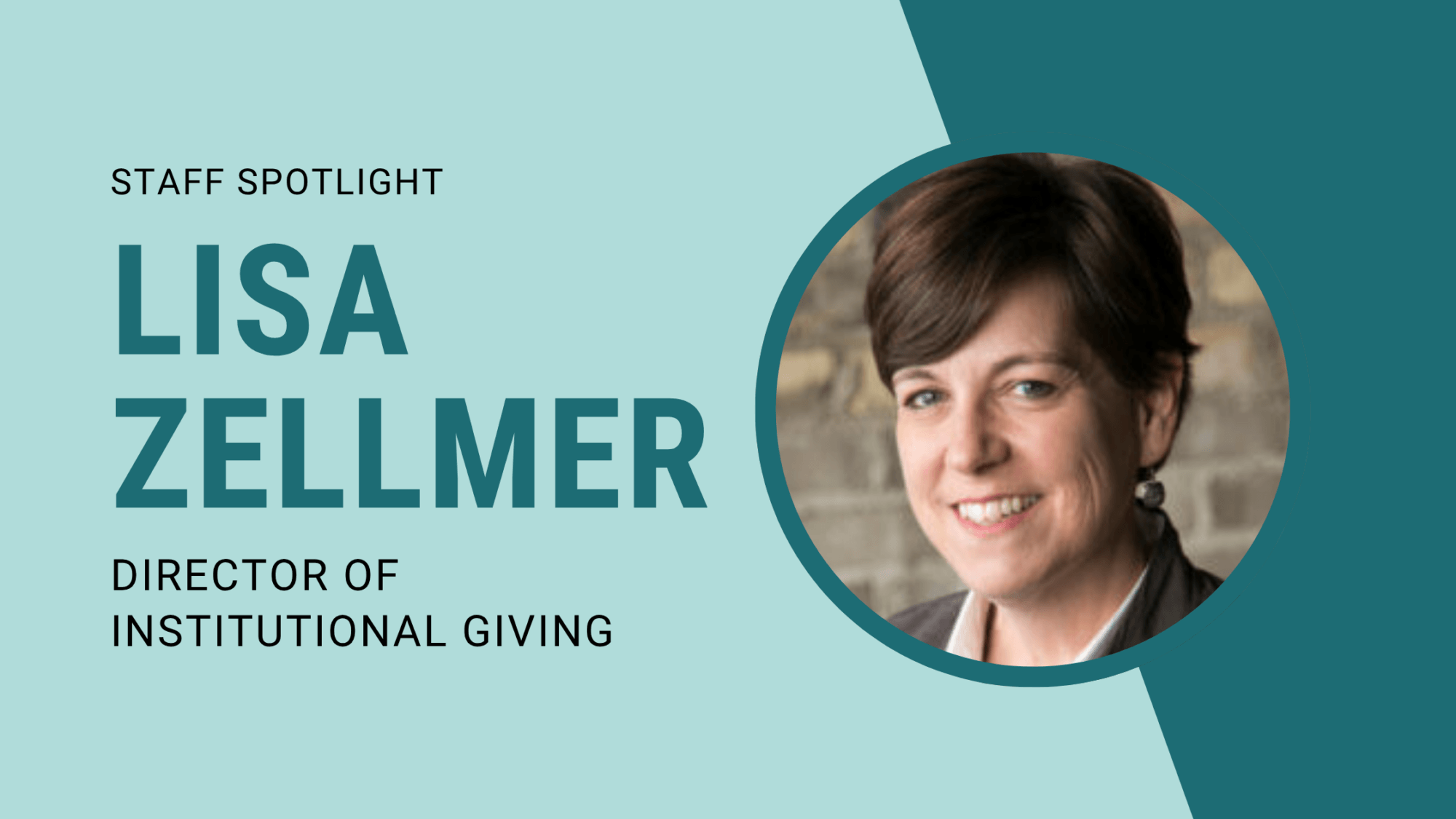
Meet Lisa Zellmer, Director of Institutional Giving
For Lisa Zellmer, Beacon’s director of institutional giving, successful fundraising is about building the relationships, resources and financial stability that allow nonprofit organizations to make a lasting difference. That perspective has guided Lisa throughout more than 20 years in nonprofit fundraising and organizational development. It’s also central to her role at Beacon, where she leads the team responsible for partnering with foundations, corporations, and congregations.
Lisa’s path to fundraising wasn’t entirely conventional. Early in her career, she worked in organizational assessment and effectiveness, helping nonprofits think strategically about how to strengthen their operations and increase their impact. She discovered while doing that work that she wanted to move beyond advising organizations to experience firsthand what it takes to put those strategies into practice. That opportunity came at Prepare + Prosper, where she took on a role that combined fundraising with organizational development.
“What I learned is that the best way to grow an organization is to develop reliable funding streams,” Lisa explains.
It’s a straightforward observation, but one that reflects a sophisticated understanding of nonprofit sustainability. Strong organizations have compelling missions and diverse, dependable sources of support, sound financial strategies and the capacity to adapt as community needs change. For Lisa, fundraising is one of the essential ways to build that strength.
A strategic approach to a complex mission
Lisa was drawn to Beacon nearly five years ago by both its mission and its distinctive approach to addressing housing instability.
“Housing is the basis; it’s the foundation for being able to achieve anything,” she says.
She was equally interested in Beacon’s commitment to advocacy alongside its housing development and supportive services.
“Very few organizations like Beacon have a policy arm, and I thought that was a great aspect. It really strengthens our work.”
Her appreciation for that intersection of policy, investment, and community impact is rooted in her early career. While working as a U.S. Senate staffer in Washington, D.C., Lisa focused on economic development during the farm crisis of the late 1980s. She saw how public resources, philanthropy, and locally driven initiatives could work together to strengthen communities. Today, that understanding informs her approach to advancing Beacon’s mission.
She’s also developed a deeper appreciation for the complexity of creating affordable and supportive housing. From assembling multiple financing sources to navigating local land-use requirements, bringing a housing development to life requires extraordinary coordination, persistence and expertise. Understanding those challenges is an important part of connecting funders with opportunities to make meaningful investments in Beacon’s work.
Building relationships that go beyond a gift
One of the most interesting aspects of Lisa’s role is the diversity of Beacon’s funding partners. Foundations and corporations often have established grantmaking priorities and processes. Congregational giving, on the other hand, can take many forms—from a special offering during worship to a grant from a congregation’s foundation or a contribution directed by a justice committee.
There is no one-size-fits-all approach.
Lisa and the institutional giving team work to understand each partner’s interests, priorities and decision-making process, identifying opportunities where those interests align with Beacon’s mission. It’s a thoughtful approach grounded in mutual understanding, transparency, and shared purpose.
While financial resources are essential, Lisa recognizes that the value of these relationships extends much further. Funders increasingly want to know that organizations are connected to their communities, listening to those most affected by the issues they address and building broad support for their work.
At Beacon, those connections can lead to much more than a contribution. Congregational partners, for example, may become advocates for housing policy, volunteers or champions who help others understand the importance of supportive housing.
“A lot of people give through action, not necessarily through money,” Lisa observes. This broader view of generosity creates opportunities for supporters to contribute their resources, relationships and voices in ways that strengthen the entire movement for housing stability.
Seeing the lasting impact of the work
Lisa approaches fundraising with an analytical mind and a deep understanding of what makes nonprofit organizations effective. But the human impact of Beacon’s work is never far from her mind. Some of her most meaningful experiences have come from seeing residents who have found stability through supportive housing go on to become advocates for others.
She’s watched Beacon residents testify at the Minnesota Legislature, lead vigils and even travel to Washington, D.C., to advocate for housing solutions. For Lisa, these moments demonstrate what becomes possible when people have a stable place to call home.
“It’s not only telling your story but being able to use your story and your voice to advocate for others,” she says.
It’s a powerful example of how Beacon’s work builds on itself: Housing provides stability. Stability creates opportunity. And people who have experienced homelessness can help shape the policies and solutions that make housing possible for others.
That long-term perspective is also what Lisa brings to her work every day. By building enduring partnerships and a diverse, reliable base of financial support, she helps ensure that Beacon can sustain its commitments, use donor resources thoughtfully and continue responding to the evolving needs of our communities.
It’s work that may happen largely behind the scenes, but it’s fundamental to making Beacon’s mission possible.