A New North Star for Beacon: Reflections from CEO Chris LaTondresse
Seven months into his role as President and CEO of Beacon Interfaith Housing Collaborative, Chris LaTondresse reflects on what he’s learned at the helm of a leading supportive housing nonprofit and what it will take to sustain this work.
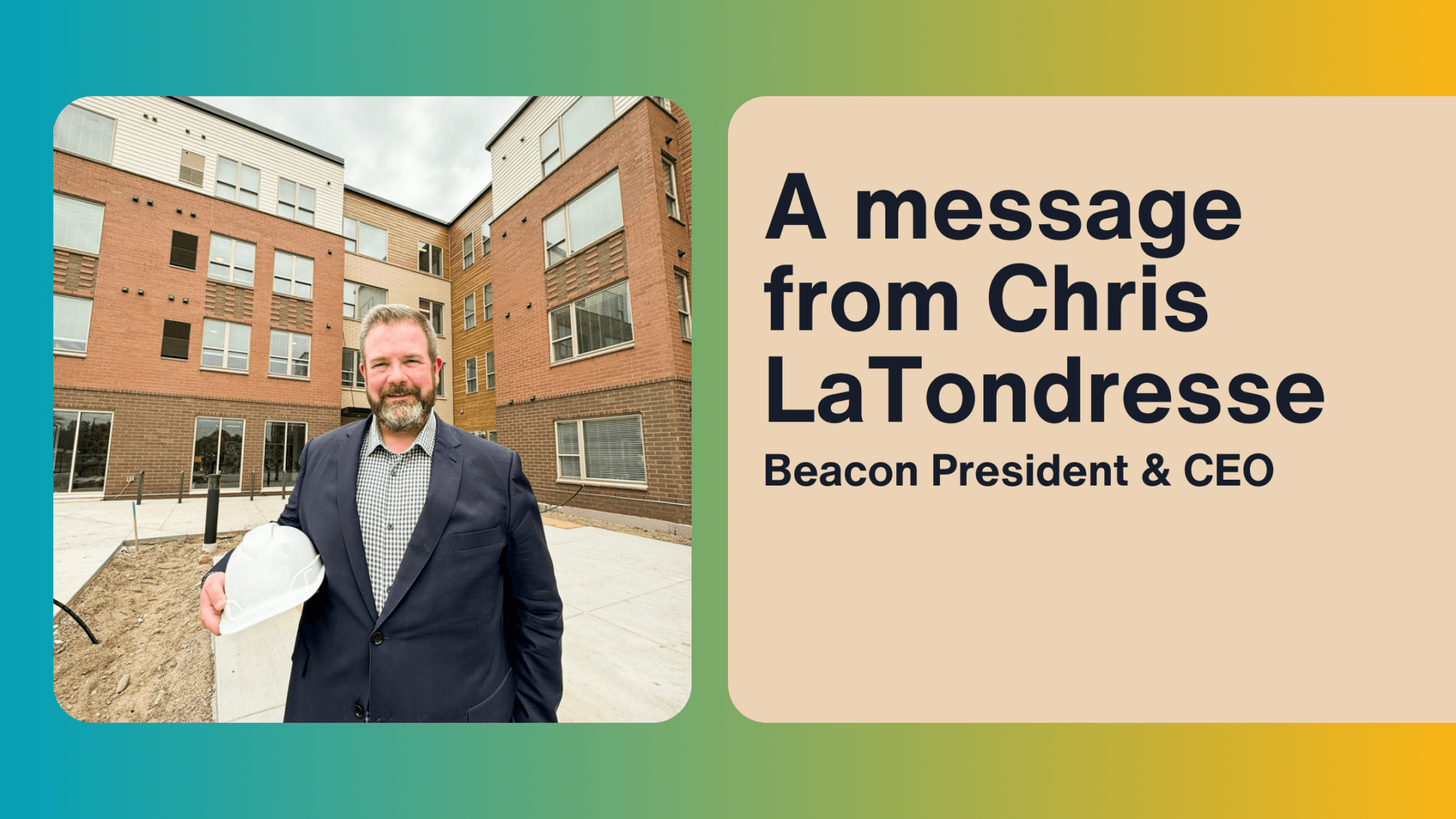
This past fall, I surprised many people by stepping down from my elected role as Hennepin County Commissioner to lead Beacon as President and CEO.
In the months since I traded my gavel for a hard hat, I’ve learned a few things I wish I had better understood as a policymaker; lessons that have reshaped my understanding of Minnesota’s housing crisis and the steps we will need to take if we are to be effective in meeting this moment.
Lesson One: Homelessness is one of Minnesota’s greatest threats. Ending it must be our top priority.
Our state faces an intersecting crisis of homelessness and affordability that harms residents, deepens racial disparities, and threatens our future.
Forty-five percent of households in the Twin Cities are housing cost-burdened, meaning they spend more than a third of their income on housing. As housing becomes less affordable, more people are threatened with homelessness.
With the sunset of the Federal eviction moratorium and the end of emergency rental assistance dollars, we’ve seen homelessness surge and communities of unsheltered Minnesotans grow more visible in encampments as unhoused people wait for sustainable solutions.
We don’t have to look far to understand why this problem has grown to crisis levels. There are 112,000 extremely low-income households in our region (30% Area Median Income [AMI] and below), and only 40,000 units are affordable at this level. That means there is a staggering 72,000-unit gap between the availability and the need for housing available for people with the lowest incomes.
Our housing crisis intersects with Minnesota’s persistent, harmful, and deep racial injustices and disparities. Black and Indigenous Minnesotans are the most vulnerable in our housing system and disproportionately experience homelessness. Of the nearly 20,000 people who experience homelessness on a given night in Minnesota, 28% identify as Indigenous and 46% identify as Black, despite Indigenous and Black communities only representing 1.4% and 7.6% of Minnesota’s population, respectively.
Creating practical solutions to homelessness will require policymakers at every level of government to dramatically scale public investments to meet the moment.
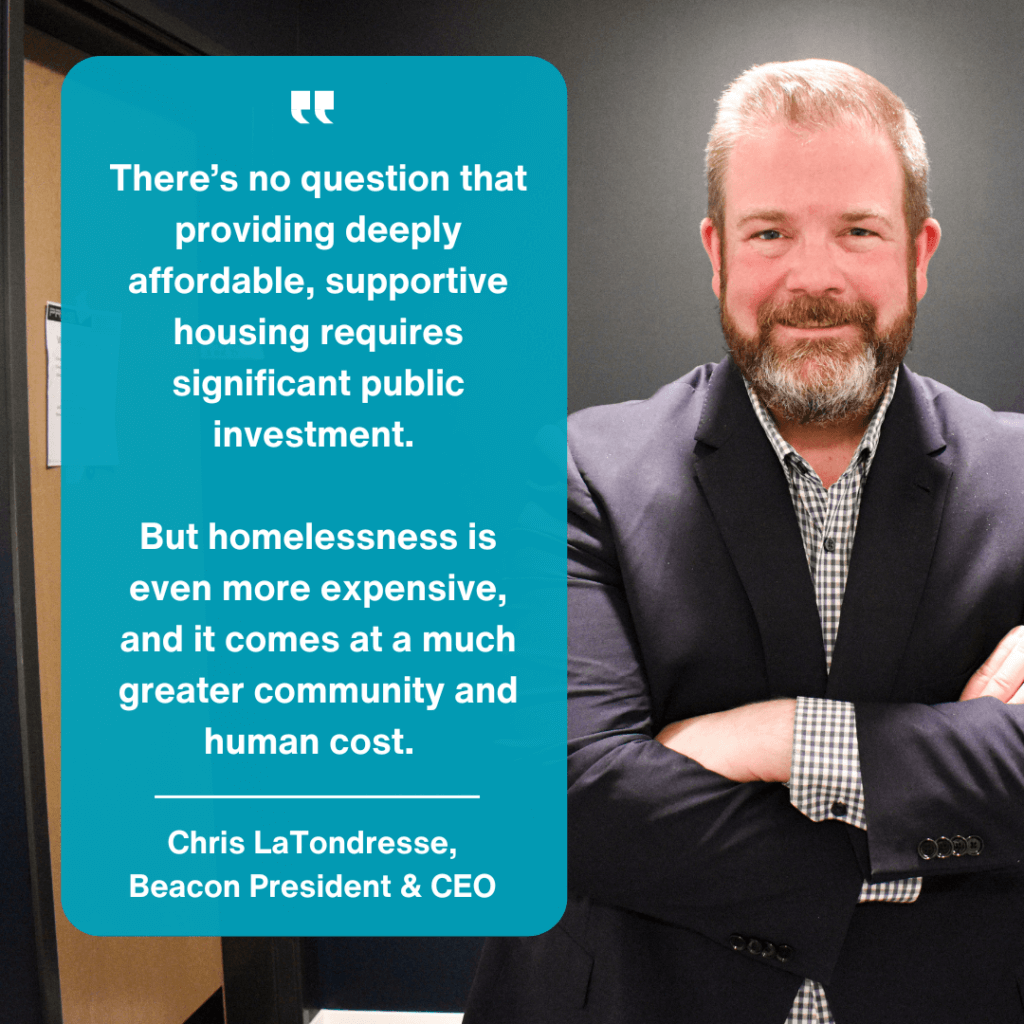
There’s no question that providing deeply affordable, supportive housing in our communities requires significant public investment. But homelessness is even more expensive, and it comes at a much greater community and human cost.
Follow along with Beacon’s blog as Chris shares more lessons he’s learned since joining the organization.