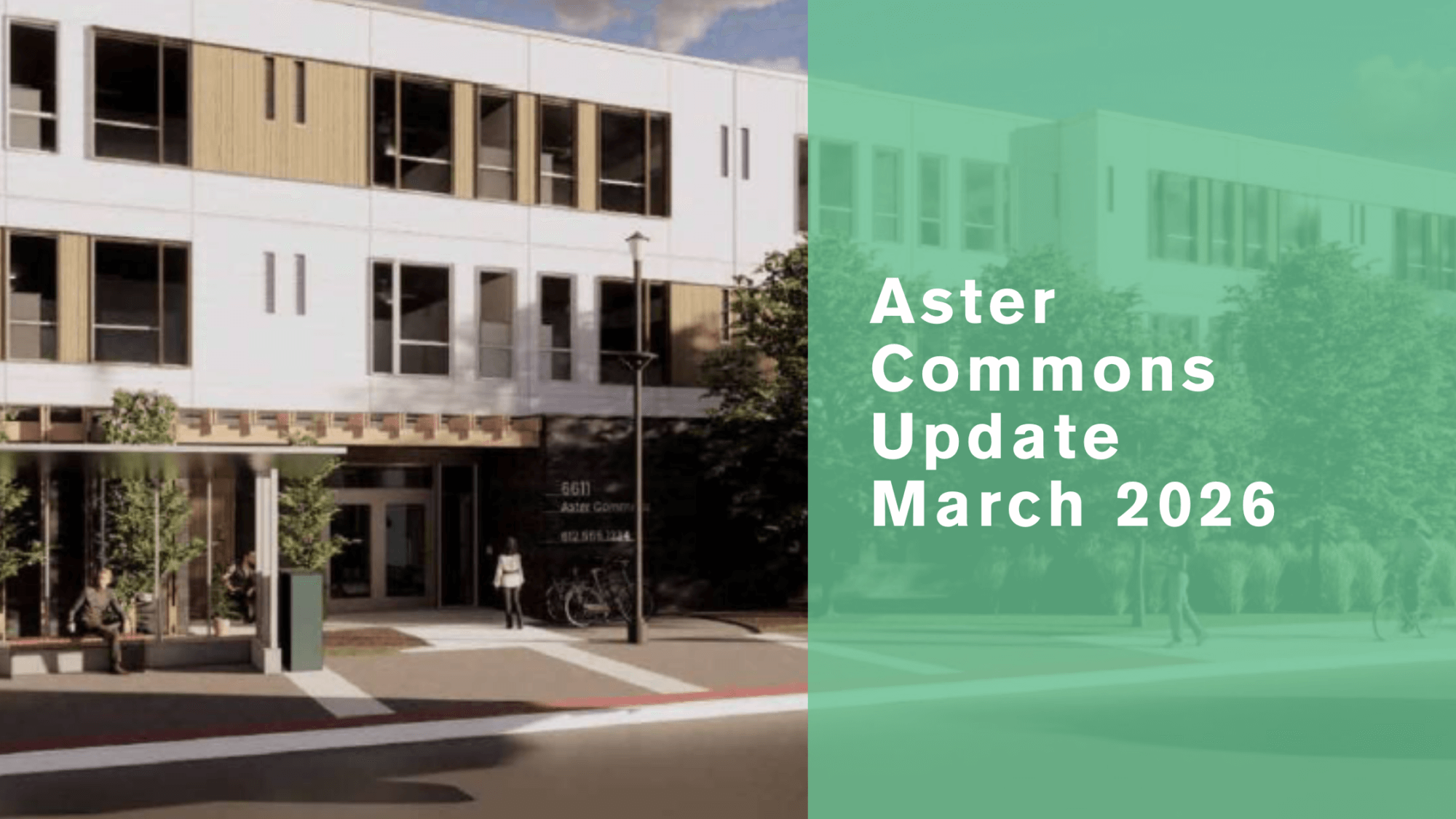
Aster Commons 2026 Update
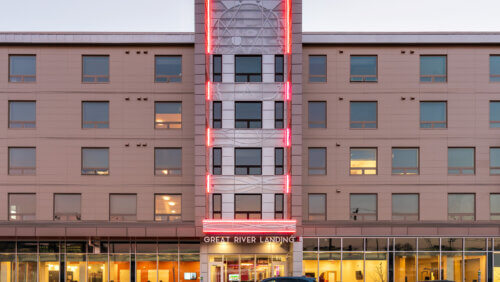
For 25 years, Beacon has become a leading developer and owner/operator of site-based supportive housing by turning “impossible” visions into reality. Each development responds to specific community needs. For example, nine Beacon buildings provide stability for youth and families exiting homelessness, Bimosedaa supports Native community members with recent experiences of unsheltered homelessness, and Great River Landing assists men after incarceration. In addition to a ten-year journey to open family supportive housing at Emerson Village, we’ve also just opened the first supportive housing serving families in Scott and Carver Counties. Each of Beacon’s 23 current properties were their own journeys, struggles, and eventually, victories made possible by the fierce determination of Beacon supporters and our collaborative of congregations.
Today, we face a first: Aster Commons—envisioned as supportive homes for neurodiverse youth at risk of homelessness—cannot move forward. After a fourth unsuccessful attempt to secure capital funding from Minnesota Housing, Beacon has decided to no longer pursue the development of Aster Commons. The need remains clear, and community support has been strong, but resource scarcity and misaligned funding priorities make the development impossible to deliver.
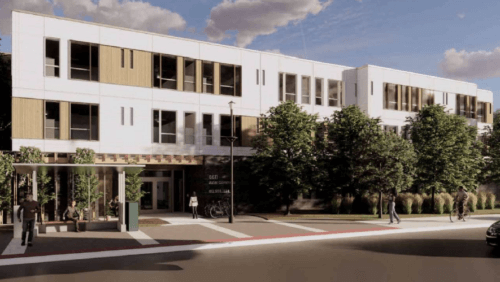
Aster Commons began like many Beacon homes: with the faith that smart development and public support could meet an urgent community need. Hennepin County and various partners identified a glaring gap: there were not enough supportive homes specifically designed with neurodiversity in mind.
Neurodivergent young people aging out of foster care often need environments and support systems that traditional high needs housing cannot provide. Our model included sensory responsive design, accessible rents, and specialized services tailored to help these young people thrive.
This model immediately received waves of support. Hennepin County pledged to contribute significantly towards the capital and services budgets, and the City of Richfield sold the land to Beacon for $1 and pledged a considerable amount of capital dollars. The Beacon community responded just as enthusiastically, as many families know intimately how critical supports like the ones at Aster Commons can be for neurodivergent youth to succeed. They trusted that Beacon could once again bridge the gap between an unmet community need and insufficient community resources to meet it.
Two major hurdles emerged that we ultimately could not clear.
First, with vouchers in short supply, we were unable to secure project-based rental assistance for Aster Commons. Therefore, the project adapted with a reliance on “Housing Support.” This more restrictive model pulled the service model away from its original focus.
Second, State and local priorities were not aligned. Minnesota Housing’s limited resources prioritize people already experiencing homelessness. Aster Commons was designed as prevention—supporting youth before they fall into crisis—which meant the project never fully fit the State’s criteria.
Over four years, Beacon redesigned the project repeatedly to match the State’s scoring system, adding more units for “highest priority” individuals and increasing service and security costs. In 2026, Aster Commons finally scored enough “points” to qualify for capital funding through the State. But the victory was hollow; the ballooning costs and complexities of meeting so many conflicting funder goals made the project, from Minnesota Housing’s viewpoint, “unworkable.” To Beacon’s surprise, Minnesota Housing staff ultimately determined the new, complex design, created to gain points in their application, was not feasible to operate and rejected the application for a fourth time.
With no viable path forward, Beacon’s staff and Board made the difficult decision to stop. While other Beacon projects have bridged gaps in the system, the misalignment and financial constraints around Aster Commons make continuing untenable. We still believe deeply in the vision—and in the young people this project was meant to serve—but it cannot move ahead in today’s funding environment.
For everyone who fought for Aster Commons, thank you. Letting go for now is heartbreaking and frustrating, but we cannot let it stop us from continuing to work for our shared vision. Beacon will not stop organizing – for new homes and for better systems that work together to ensure that all people have a home.