Creativity & Collaboration Builds Beacon Homes
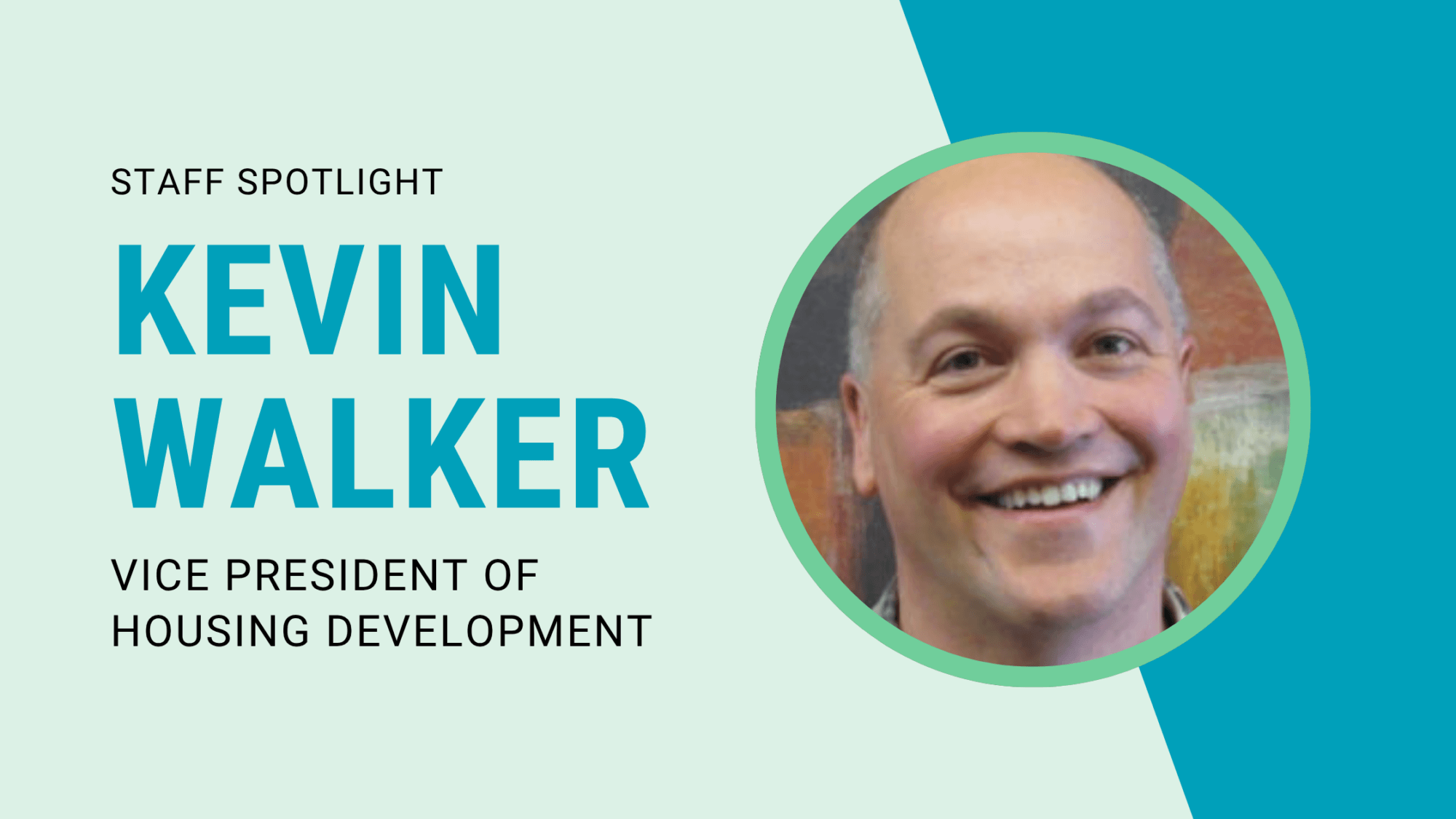
Collaboration is at the heart of Beacon’s work—and for Kevin Walker, Beacon’s vice president of housing development, it’s also a form of creativity. Every Beacon home exists because people, congregations, partners, advocates, and residents come together to make it happen.
For Kevin, that collaboration is a form of creativity. “It’s dynamic, it’s deadline-driven, it’s a mix of quantitative and qualitative, public speaking, writing well about our work, and representing it well to the wider community,” he says.
A 360-Degree Effort
It’s certainly not a solo job, and Kevin describes it as “a 360-degree effort.” Each of Beacon’s developments requires site control, land use approval, capital to build, rental assistance to help residents afford housing, and services funding to support residents exiting homelessness or housing insecurity.
Before much of that work can happen, there are advocacy efforts that set each project up for success. Kevin says, “We rely on systems change that’s informed by our work as a practitioner of supportive housing. Inherently, we rely on approvals at local, regional, and state levels, and the land use approvals for us to build. To do all of that, we have to build political power through our congregational base, and they show up time and time again.” He adds, “[From our base,] we have access to thousands of congregational members, many of whom have stepped forward to volunteer to come to multiple planning commission meetings and stay for late-night city council sessions. We routinely can get 20, 50, 200 people in matching blue shirts to show up. They’re part of how we are successful.” The collaboration is real, and it’s what makes Beacon homes a reality.
Not Just Quantity; Informed Quality
Kevin’s been at Beacon for eight years. During his tenure, Beacon has earned approval for 11 of 11 land use proposals, 10 projects have been completed, with more on the way. The 360-degree effort, combining the power of congregational members, a community organizing model, and housing development and design expertise, pays off. But collaboration doesn’t end once approvals are secured. The same commitment to partnership shapes the homes themselves.
While housing volume is a big part of what Beacon is trying to address, it’s not everything. Kevin says, “We’re not here just to pound out housing units. Yes, there’s a piece of it that’s a production-oriented enterprise, but it’s also true that we’re building environments and ultimately communities where people are living in close proximity to other people. And that means that we want to build a place that people are proud to call home, that welcomes them.”
Beacon residents have encountered a variety of barriers and challenges, and an essential part of the organization’s value system is to create high-quality homes that people can live fully in—with natural light, community spaces, amenities, and access to fresh air. “We’ve found some creative ways to invite the outdoors into our developments, which has been really fun,” Kevin shares.
How do Kevin and his team know what people want? Beacon starts with discussions with local community members, officials, and service providers to identify unmet housing needs in the community. How does Beacon prioritize various building elements? Kevin describes a process that invites community members who have experienced housing insecurity into the planning process. Via design workshops with architects, Beacon invites potential residents to share their vision of home with those who will build it. They ask questions like “What does home feel like for you?” and “What do you dream about for your home?”
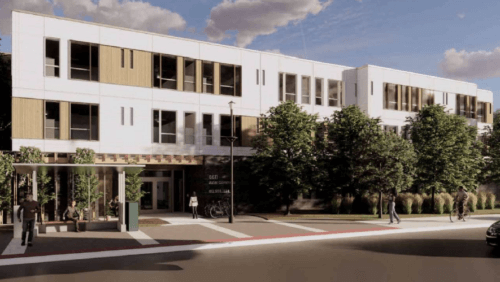
This is not just an awareness exercise; it’s quite literally part of the plan. Kevin says, “It’s critical that we pay attention to what they want and what they envision.” At one key juncture when building Bimosedaa, a Beacon building positioned to serve a primarily Native resident population exiting encampments, Kevin remembers budget constraints threatening a planned rooftop green space. He advocated for it to stay and shares, “Having access to the outdoors is essential to our mental health. There’s no other access to outdoor space there—that deck seemed critical for residents’ quality of life. I’ve learned the space has just been a highlight for residents; the deck has hosted a quinceañera, family reunions, community gatherings, and is a place for residents to reflect and find peace.”
A Family Legacy of Community Care
Kevin comes to the work with professional experience as a co-op organizer in affordable housing and a story of family resilience. His paternal grandfather worked in grain elevators and died in one’s explosion at the height of the Great Depression. Kevin’s grandmother, with five children, was able to stabilize and raise her children thanks to her resilient work ethic, the care of pooled family resources, and public sector support that made their housing possible. Without this support, the family could easily have become homeless. Kevin concludes, “Beacon’s model has always been profoundly interesting to me. It links my passion in co-op and community organizing to a systems change theory that there are people in our community who care, who want to see something better for their neighbors.”
For Kevin, building supportive housing is about much more than construction. It’s the creative work of bringing together people who have experienced homelessness or housing insecurity, congregations, advocates, public partners, and communities around a shared vision. Every Beacon home reflects that collective effort—and the belief that everyone deserves a place to call home where they truly belong.