
Minnesotans Sound Alarm as HUD Finalizes Deep Cuts to Homelessness Funding
170,000 Americans at risk; 185 Minnesota organizations unite to defend proven solutions
Minneapolis-Saint Paul — The U.S. Department of Housing and Urban Development (HUD) today released new rules that could slash federal homelessness funding for 3,600 Minnesotans, confirming fears long raised by Minnesota housing leaders. Beacon Interfaith Housing Collaborative and a growing statewide coalition are calling on HUD to reverse course or Congress to intervene and prevent the most devastating housing cuts in modern U.S. history.
“The scale and speed of HUD’s cuts and rule changes place Minnesotans who have overcome homelessness at immediate risk, leave communities with zero time to plan, and reverse decades of bipartisan progress on proven solutions to homelessness,” said Chris LaTondresse, president and CEO of local housing non-profit Beacon Interfaith Housing Collaborative.
“Supportive housing works. It saves lives, saves taxpayer dollars, and reflects the best of who we are,” LaTondresse added. “Minnesotans are speaking with one voice: protect what works.”
The new federal rules will gut homelessness funding nationwide by imposing a 30% cap on funding for permanent supportive housing, reducing investment from $2.3 billion to roughly $1.2 billion, putting 170,000 Americans who have successfully exited homelessness at immediate risk—functionally doubling chronic homelessness by HUD’s own count if fully implemented.
The damage is compounded by other changes that reduce base funding for local interventions—known as Tier 1 support—from 90% to 30% of each community’s annual allocation. Combined, these shifts could reduce funding for permanent housing by more than 85% and strip away both the scale and flexibility of the nation’s primary homelessness response system.
Other rule changes may trigger further local cuts, including new mandates tied to executive orders on immigration, public camping, and gender-related policy compliance.
Currently, HUD invests $3.5 billion annually in the Continuum of Care (CoC) program—the backbone of America’s homelessness response. About 400 local CoCs manage these funds nationwide, with roughly 87% of current CoC funding supports supportive housing: deeply affordable homes paired with voluntary services that help people stay stably housed.
Under the new rules, HUD would not only shrink these direct investments, it would also cap the share of those remaining funds that can be used for supportive housing at just 30%. In effect, local communities would lose both their autonomy and their ability to sustain the nation’s most effective homelessness intervention—cutting the backbone of the system several times over.
Minnesota Impacts
Minnesota’s ten local Continuums of Care received $48 million in CoC funding in 2024, supporting housing and services for more than 3,600 Minnesotans. Roughly 82% of these funds sustain deeply affordable supportive housing for people with the highest needs — seniors, veterans, people with disabilities, survivors of domestic violence, families, and youth.
Minnesota stands to lose more than half of this critical funding, displacing thousands of residents and destabilizing the housing system statewide. This could result in an immediate increase in unsheltered homelessness, widespread program closures, and severe disruptions to Minnesota’s homelessness response, undermining the viability of thousands of supportive housing units relying on CoC funding to sustain services, case management, and rent assistance that keep residents stably housed and prevent returns to homelessness.
“Minnesota’s supportive housing system is a national model,” said LaTondresse, “Organizations like Beacon built these homes following HUD’s rules and Congress’s intent. Now HUD is cutting back, changing the rules mid-stream and putting lives on the line. We cannot let that happen.”
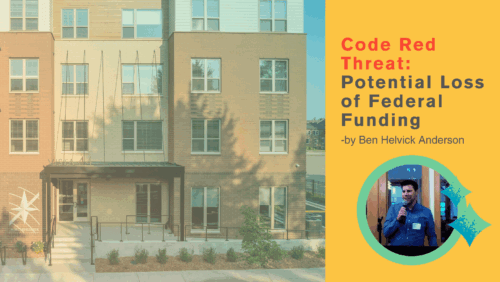
Beacon operates more than 268 homes across the Twin Cities that rely on HUD CoC funding, including Emerson Village in Minneapolis and Vista 44 in Hopkins, both designed to serve families overcoming homelessness. Without this HUD funding, these and similar developments face immediate operating shortfalls threatening housing stability for hundreds of residents.
Bipartisan Response
Minnesotans are uniting in unprecedented numbers to defend what works. More than 185 housing organizations, businesses, and faith communities have signed a letter and formed a statewide coordination table—the Minnesota Action for Continuum of Care and Transformation (MN ACT)—to protect supportive housing funding and preserve decades of bipartisan progress.
Bipartisan concern is also rising in Congress. Twenty-two Republican members, including Minnesota Rep. Pete Stauber, have signed a letter urging HUD Secretary Scott Turner to extend all existing CoC grants expiring in 2026 for an additional year. These lawmakers said the “extension is essential to prevent service disruptions for individuals and families experiencing homelessness, sustain continuity of care for vulnerable populations, and allow HUD adequate time to implement its next generation of homelessness policy reforms.” Sen. Tina Smith and Sen. Amy Klobuchar have also signed onto a similar letter circulated among Senate Democrats.
MN ACT’s following action will be a twelve-hour vigil to call attention to this issue called “Losing Sleep, Losing Homes” on Tuesday, November 25th, where faith leaders, residents, and partners will gather to honor those whose housing is at risk and to call for Congress and HUD to keep their promise to communities nationwide. Attend the vigil by clicking here.
Media Contacts:
Brian McClung
brian@mcclungpr.com
(612) 965-2729
Heidi Goldman-Gray
HGoldman-Gray@beaconinterfaith.org
(612) 245-2197