People Have The Power
A reflection on what we can do together. Written by Emily Goldthwaite Fries, Senior Congregational Organizer
I’ve recently been reminded of the 1988 song People Have the Power by Patti Smith. Echoing biblical and spiritual prophets, Smith chants a hopeful message, and perhaps a warning too. For things to change, everyday people have to claim their power:
“The people have the power. The power to dream, to rule, to wrestle the world from fools…I believe everything we dream can come to pass through our union. We can turn the world around…We have the power.”
This very week, members from over 20 Beacon congregations, along with other supporters and allies, are taking bold actions to pass our groundbreaking Bring it Home, Minnesota legislation, which will help ensure all Minnesotans get the rent support they deserve.
 Together we’re meeting with over 60 legislators to share our vision that all people have a home. That vision, along with our dream of rental assistance for every Minnesota family who needs it, is drawing closer each day as we speak to Representatives and Senators who hold the decision in their hands. A decision that impacts our daily lives.
Few legislators will openly disagree with our vision that all people have a home. After all, who could disagree with a statement like that. Yet, we know that a good idea does not become law on its own merits. Which begs the question: How do the people – everyday people like us – become powerful enough to demand a change as bold as ensuring no one is homeless in our state?
The secret is in the kind of power we want to build. In the tradition of congregation-based organizing, there is an important principle of relational power – which takes some practice.
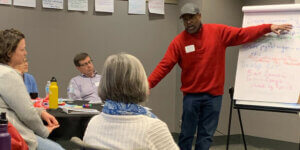 In our Power Tools training for leaders (pictured left), we spend significant time wrestling with the word power, to reclaim its positive connotation. Today, like in 1988, many people have become disillusioned with power that is so often misused. Power over people rather than power with people. Power that is distorted, abused, and hoarded. Power that tells us some voices matter less than others. Sometimes, this can tragically occur within communities of faith.
It’s natural that many have developed a reluctance to claim our power within our democracy. But the most neutral definition of power is simply “to be able” to do what we are trying to do. There’s a huge gap between that vision which sounds so reasonable, and the reality we live in now where 550,000 Minnesotans can’t afford their housing. One person – or even one congregation – cannot reach across it, no matter how charismatic or passionate they may be.
In Beacon’s work to impact housing policy, we name explicitly that power has often been used to generate wealth for white Americans while shuttering residents who are Black, brown, Asian, Indigenous, people of color and immigrants out of the same opportunities.
While this sounds abhorrent and foolish to us now, we’re still facing racism that’s deeply entrenched in today’s housing systems.
How do people of faith build power to cross that chasm and “redeem the work of fools”? It’s all in our relationships built on respect, love of neighbor, and shared self-interest. These are the strongest antidotes I know to the kind of powers that seek to divide and repel us from acting together.
The wisdom of our many faith traditions teaches us that if we were to truly harness the power of all that we share, then there’s nothing on earth that could stop us.
We’ve learned over the past couple of years that building and maintaining these life-sustaining relationships is harder, and perhaps even more important, than we ever knew. Especially during this public health crisis which forced us to change how we connect and do our work.
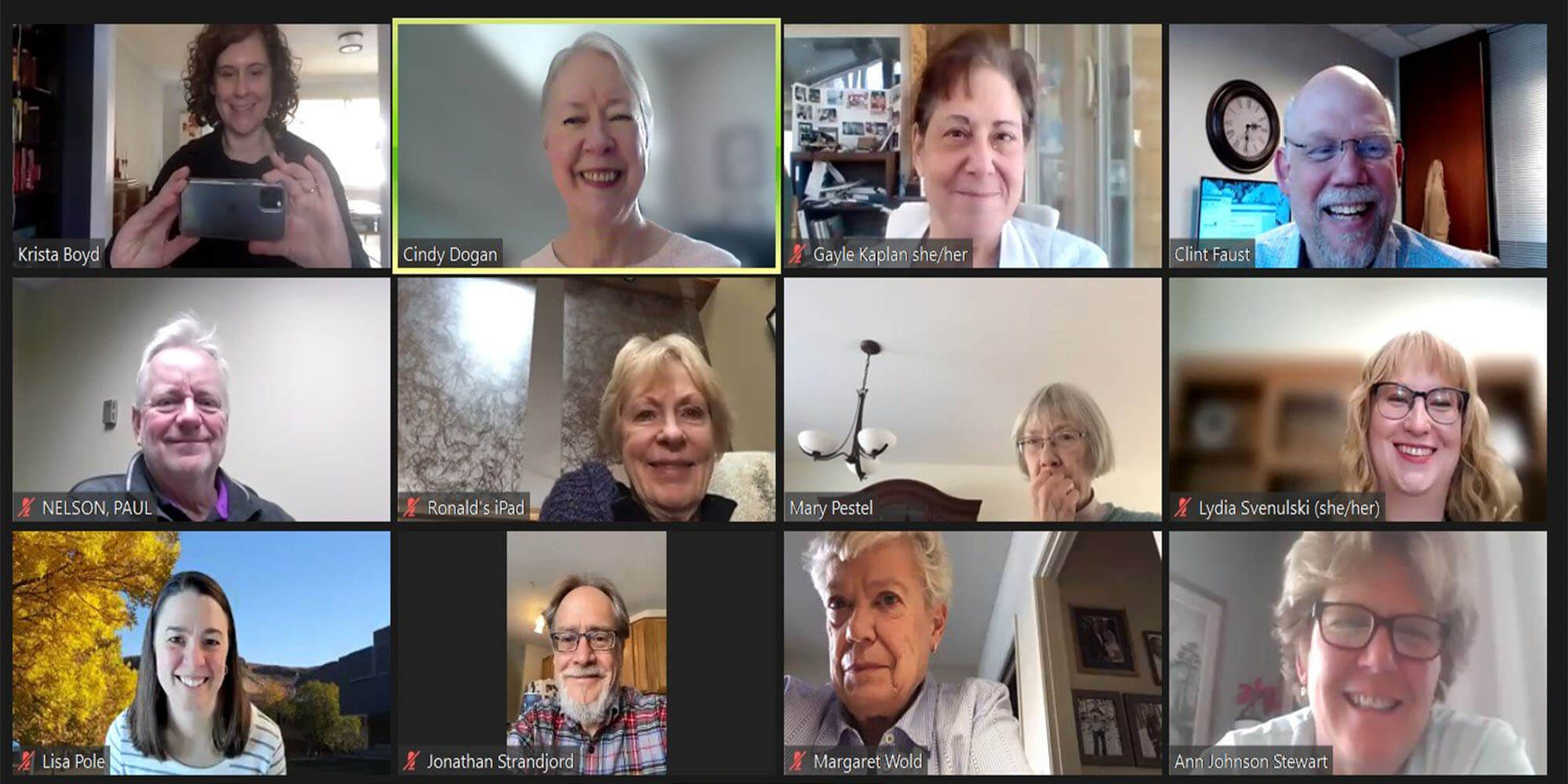
 Last summer and fall, our congregations were invited to participate in our Powerful Together: Conversations for Change inreach, an intentional season for one-to-one conversations. These one-to-ones are special conversations that train us to listen deeply and reveal places of concern, passion, values and personal stakes. These conversations are vital in our ability to build relationships within our collaborative.
Well received initially, the inreach proved more challenging than anyone could imagine. Our goal was to have 1,000 conversations which we hoped would result in higher participation in our policy work such as the convening and Bring it Home, Minnesota. Despite training 170 people to conduct five to ten conversations each, we only logged about 320 conversations total.
This was a learning opportunity from what seemed like a failure on the surface. What to make of the 700 conversations that didn’t happen? We know that Zoom burnout and competition for people’s time, played a role. But, we also know that some visitors shied away from conversations that seemed too personal, and other who earnestly looked for members of their congregations to talk to were turned down by colleagues wary of being asked to do “one more thing.”
The 300 conversations we did have were very meaningful and identified many people who are new and excited about our work. Those who participated as visitors, visitees, or clergy benefited and built skills they will continue to use in developing teams and leaders. They shared stories that reveal just how near the issue of housing instability is to their hearts and, in some instances, their daily lives.
What happens to our power – the power of the people – if we were to give up now on the relationships that make it possible to reach across that chasm and bring our vision closer to reality?
The great news is that our amazing collaborative has not given up! Together we’re learning what building power feels, looks and sounds like. Core leaders in many congregations have invested extra time in planning, training and have taken a new step in reaching out to legislators and inviting people to their meetings who have never done anything like this before.
It takes a bold and committed collaborative to make this work a reality. We’re incredibly thankful for a collaborative committed to building power through relationships. We look forward to connecting with each of you as we move this work forward. To learn how you can take-action with us click here.