
How John’s Beacon home helped him become a voice for housing justice
In the early 2010s, John Fritz was already over three decades into his journey. Experiencing several bouts of homelessness, John felt stuck. It was as if he couldn’t make a change or find a place that was right for him. This would all change when he found home at American House, supportive housing from Beacon.
John is the author of the book ‘Homeless Is Not Hopeless’ and has shared his story with the Beacon collaborative in the past. With over a decade of stability under his belt, and an exciting move on the horizon, John reflects on his journey and how American House helped shape him into who he is now:
I’d like to start by saying thank you to Beacon Interfaith Housing Collaborative. They gave me a home when I was in desperate need and that gave me a chance to change my life. Now as I prepare for a big move to Saux Rapids with my girlfriend, my storybook love I found in the 1970s, I want to reflect on who I was before American House and who I am now.
“I was 16 years old, and it felt like no one cared…”
 Growing up, I had a very violent and dysfunctional home. I was the youngest of six; one older sister and five brothers. Although I was always told that I looked just like my father, he’d deny that I was ever his.
When I was 12, my mom would briefly leave my dad. By then I had already discovered alcohol and weed. My mom could not control me. At age 15 I was already a full-blown addict. She’d later get back together with my dad.
Around that same time, I had been busted for marijuana and breaking-and-entering in a small town in Northern Minnesota. I felt like an outcast. With my folks back together, I left home. Not long after, I lived in the city park of my small hometown of 100 people. I was 16 years old, and it felt like no one cared.
This began a long journey of trying to live on the fringes of society. I was hitchhiking at first, then I would be riding freight trains as a modern-day hobo. This would last for 34 years, where I experienced two thirds of my time as a homeless individual.
At 50-years old, I was struck sober. I was living with an old girlfriend of mine who was still doing drugs and drinking. I managed to stay clean for 14 months, but I felt like nothing was changing. The only thing that changed was that I wasn’t drinking. I felt desperate and lonely without a home to call my own.
“Then came a ray of hope…”
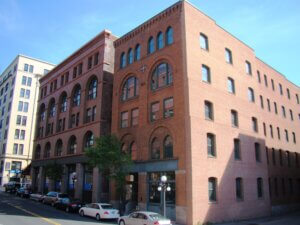 Then came a ray of hope. I heard about American House. I had no idea what it was all about. When I talked to one of the case managers there, she helped me apply for a room. She stood by my side through the whole process, and advocated for me as they brought me into housing.
This was the first time in my life I ever really had a place of my own. Having a supportive home is when my life finally started to change. I was involved in AA and DRA, and I thought myself into recovery. Now I was starting to make friends. And the onsite staff guided me through benefits and situations I didn’t understand.
After living on the streets as much as I had been, and riding on freight trains, I was so far on the fringe of society. At first I didn’t know how to live in this new world. But things started changing with the support I received. I felt safe in my own home. I don’t think I’ve ever felt like that before. Even as a child.
I could come and go as I pleased. I had a place to cook and sleep. I didn’t have to worry about where I would be sleeping at night. While at American House I learned about the Housing First model – where they bring individuals exiting homelessness into a home before anything else with supportive services wrapped around them. I saw firsthand how this model helps people like me find their footing after experiencing a lifetime of homelessness. I have become a staunch supporter of this model.
I called American House my home for about 15 months. It’s where I blossomed. As I became stabilized, I found my way to moving into my own home without supports. I really don’t think I could have gotten this far and remained sober if not for American House and the on-site staff.
“I’ve become a voice that helps support housing justice…”
 Fast-forward a few years: I was asked to speak at one of Beacon’s fundraising luncheons. I was terrified when I was told I would be speaking in front of over 800 people. I did it anyway because I believe so strongly in Beacon’s mission. Through this, I met someone who helped me write and publish the story of my life, Homeless Is Not Hopeless.
I’ve become a voice that helps support housing justice. I have spoken to legislative committees at the Capitol several times with Beacon, and I am still 13 years later a big supporter of Housing First.
It feels like a miracle that I stayed sober that first year at American House.
I believe that if you house someone in their own place, then they can start working on things like addiction and mental health. To take a person who was homeless for a long time and bring them into housing gives them hope.
I am very blessed to have experienced the chance to change my life at American House. I know the story is not simple, and that it took me years of searching before I found a solution that was right for me. And I know that my growth and journey was made that much easier thanks to American House.
When you support Beacon, you help create opportunities for individuals like John. With the creation of Bimosedaa in Minneapolis, an upcoming Beacon home operating under the Housing First model, more residents will be able to find the stable ground they need to thrive. Click here to learn more and make a gift today.