
Time to Act for Supportive Housing
Code Red Threat: Potential Loss of Federal Funding
By Ben Helvick Anderson, VP of Policy and Organizing
Supportive housing is a critical piece of our country’s homelessness response system. For decades, leaders of both parties have invested in this coordinated system known as the Continuum of Care (CoC). Bipartisan investment has been sustained because they know that permanent supportive housing works. It saves lives and is cost-effective; it provides low barrier, deeply affordable homes paired with on-site services, helping people who’ve experienced chronic homelessness stabilize and rebuild their lives.
This approach transforms lives in Beacon supportive housing buildings all the time. When affordable housing is combined with support services, people have the opportunity to thrive—reaching new goals related to health, education, employment, and family well-being. Supportive housing directly serves people who need homes, but the whole community benefits from this investment.
Right now, these homes are at risk. The largest source of federal funding for supportive housing could disappear if we don’t act to save it. Politico reports that the Department of Housing and Urban Development (HUD) plans to shift away funds that the Continuum of Care (CoC) program uses for supportive housing.
Supportive Housing Works: A Proven Solution at Risk
CoC is the nation’s largest homelessness response system, funded through competitive grant programs that funnel $3.6 billion annually into local solutions to help communities coordinate housing and supportive services to prevent and solve homelessness. The goal of the CoC is to move individuals or families from being unhoused or in a shelter to supportive housing. To do that, it funds the Homelessness Management Information System (HMIS) and “coordinated entry” hubs that match people to housing opportunities; 87% of the funds flow directly to providers of supportive housing like Beacon.
HUD has considered changing the goal of the program, moving most of the funds away from supportive housing in favor of short-term programs that are more expensive and less effective. They would do that in several ways, the most prominent being capping funds allocated to supportive housing at 30%.
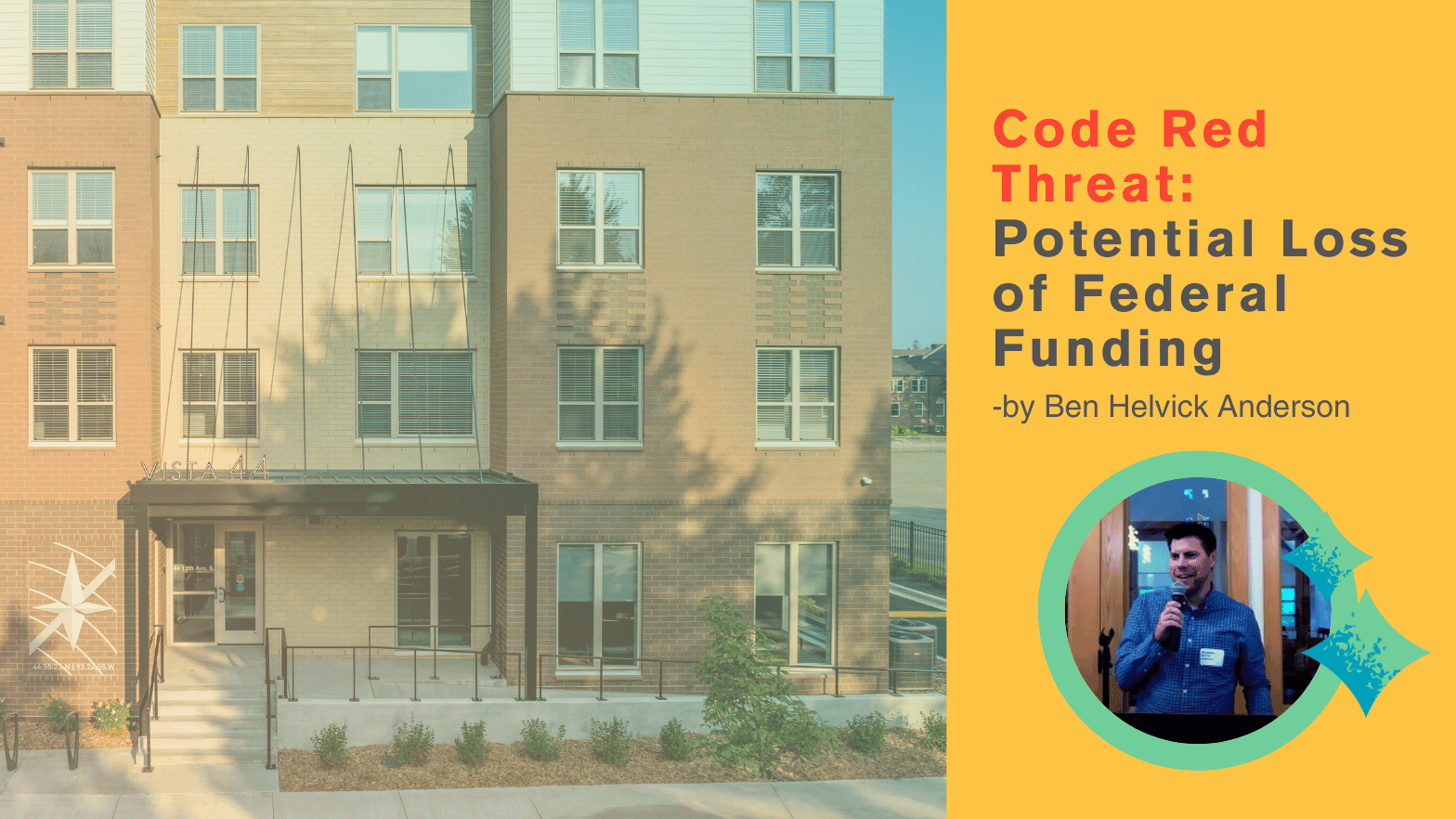
This shift would be devastating for supportive housing that has helped an estimated 170,000 people nationwide, including seniors, veterans, people with disabilities, and young parents, escape cycles of homelessness and housing instability. Half of Minnesota’s 6,000 supportive housing units rely on CoC funding, including four Beacon buildings: Vista 44 in Hopkins, Emerson Village in North Minneapolis, Lydia Apartments in Minneapolis, and Kimball Court in St. Paul. Without CoC funds, thousands of our neighbors would be at risk of returning to homelessness.
Decades of progress are getting unraveled; it’s a defining moment for supportive housing and those who understand its impact. It’s time to inform, organize, and advocate like never before.
Get informed and spread the word.
Share what you know with your friends and your faith communities. The more people who understand that supportive housing works and is under threat, the better.
Organize and raise our voices together.
Beacon is joining forces with partners across Minnesota and the nation on strategies to stop this major funding shift from happening. Learn more here.
Advocate.
Members of Congress are working to include a provision that would halt this funding cut. We need you to email your members of Congress today to support this strategy. Click here to take action.
We know supportive housing saves lives, is cost effective, and reflects our deepest values. Now we must fight for it. This is the alarm bell we can’t afford to ignore. If we inform, organize and advocate, we will protect these critical funds and the homes of individuals and families who need them.
Let’s stand up for supportive housing.
Quick Facts.
CoC creates proven solutions to homelessness. Here’s what’s at stake:
- Congress has repeatedly affirmed bipartisan support for CoC funding, yet HUD’s plan would create a dangerous gap starting January 2026. Over 1.1 million U.S. households need supportive housing. These programs haven’t failed—they’ve been underfunded. The solution is to build on what works, not dismantle it.
- In 2024, CoCs channeled $55 million to housing, shelter, and services for more than 13,000 Minnesotans experiencing homelessness. Communities that have used this funding to scale permanent supportive housing have reduced homelessness by 30–60%, while lowering public costs through fewer emergency and health care interventions.
- More than 3,000 homes are supported in Minnesota through CoC using the permanent supportive housing model, each home moving neighbors off the streets and into stability.
- 36 states, including Minnesota, could lose eligibility under HUD’s proposed rules, threatening housing for 170,000 people and overwhelming shelters, hospitals, and local budgets. These politically motivated ideological criteria would impose harm on our neighbors and have nothing to do with actual solutions to homelessness.