Last updated – 06/30/2026

Minnesota Legislative Session Roadmap

The legislative session can move quickly. Beacon updates this page throughout the session so advocates can track progress, deadlines, and opportunities to speak up. Check here regularly to follow what is happening at the Capitol, understand what it means for housing, and know when to take action.


Beacon’s 2026 Priorities

Beacon’s advocacy is focused on sustaining, stabilizing, and growing supportive housing. These priorities reflect the policies and investments needed to ensure more Minnesotans have access to stable, affordable homes and the support they need to thrive.
Increase and consolidate state investments in supportive housing to coordinate and efficiently fund capital, operating, and service dollars, preventing homes from being lost this year and creating pathways for future stability.

Step 1: Pass a bill to allow Minnesota Housing to spend $9 million of existing dollars – PASSED!
Step 2: Secure $40 million of new money from supplemental budget – the Governor’s Supplemental Budget Proposal was an amazing first step = $100 million for housing):

$33 million for Supportive Housing
$33 million for Emergency rental assistance (Family Homeless Prevention & Assistance Program (FHPAP))
$34 million for downpayment assistance

Update:

It was an incredibly tough and competitive year for funding dollars at the State legislature. Beacon and our partners’ persistent advocacy until the end allowed us to achieve $13 million in funding for supportive housing.


The State Housing Tax Credit is a powerful and effective tool that incentivizes private investment in building and preserving affordable housing across Minnesota, but can only fund capital, the bricks and mortar of a project. Supportive housing cannot exist with capital alone, and funding for ongoing services is scarce. Strengthen the existing tax credit by adding supportive services as an eligible use.

Update:

We continued to build momentum for this program (you can read more about it here), but larger fights over taxes this year blocked any meaningful change to the State Housing Tax Credit. We will continue utilizing this essential program in its current form and work to update it in 2027. 


For a prosperous future, Minnesota needs secure and predictable dedicated revenue for our homelessness response system, rental assistance, and home ownership by creating a dedicated revenue stream for housing. Allow Minnesota to vote on a constitutional amendment for dedicated housing revenue.

Update:

The Our Future Starts at Home campaign is working to create an ongoing funding source for housing, which relies on state legislators passing a constitutional amendment that would result in a new state-wide sales tax. This year, the Our Future Starts at Home campaign’s goal was to continue raising awareness of the issue and build momentum for next year; we achieved that by showing up in large groups and speaking at five hearings with legislators.  


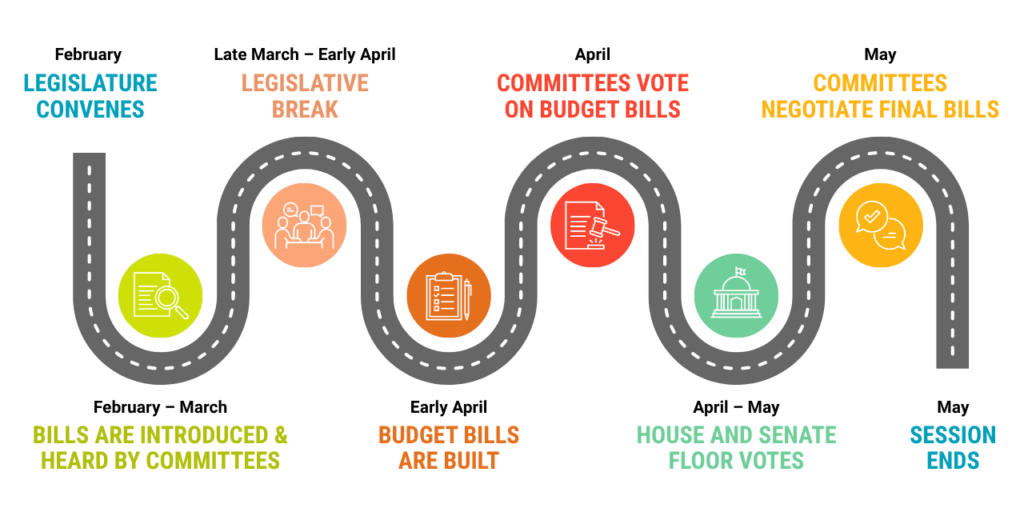
Every session is different, but the overall path is similar

Lawmakers move from hearings, committee meetings and early bill discussions into budget decisions, floor votes, and final negotiations. This roadmap is designed to show both the legislative process and the points where public action can help shape outcomes.

The Session at a Glance


Follow the Session Step by Step

Early Session: Bills are Introduced & Committees Set Priorities

What’s Happening

Lawmakers introduce bills and committees begin holding hearings. As regular hearings wrap up, committees start setting targets and preparing for budget work.

Why it Matters

This is when ideas first start moving and housing issues begin to take shape for the year. Not every proposal will move forward.

How You Can Engage

This is usually a time to learn and get oriented. Watch for updates on the policies Beacon is supporting and be ready to contact your legislators.


Legislative Break: Public Activity Slows, Planning Continues

What’s Happening

There may be fewer public hearings, but decisions continue behind the scenes. Beacon’s communications plan specifically calls for explaining what happens during the break and how strategy continues even when activity is less visible.

Why it Matters

This stage helps shape what comes next, including budget targets and negotiation plans.

How You Can Engage

This is a good time to sign up for updates, invite others to get involved, and prepare for the weeks ahead.


Budget Phase: Decisions Start Moving Fast

What’s Happening

After break, lawmakers return, budget targets are set, and budget bills are built.

Why it Matters

This is when Beacon’s housing priorities are more likely to be included, changed, or left out.

How You Can Engage

You may be asked to email legislators, attend a press event, join a training, or contact decision-makers.


Committee Deadline Weeks: Key Decisions are Made

What’s Happening

Committees move quickly to pass omnibus budget bills before key deadlines. There is a lot of urgency during this period.

Why it Matters

If housing priorities are not included here, it becomes harder to move them later.

How You Can Engage

This is often the most important time to show up. Advocates may testify, attend hearings, meet with legislators and their staff, or take other rapid-response actions.


Floor Votes: House and Senate Act

What’s Happening

The House and Senate vote on their budget bills.

Why it Matters

This shows what support exists in each chamber and where differences remain.

How You Can Engage

Beacon may ask supporters to contact lawmakers, share updates, or help build momentum for housing priorities.


Final Negotiations: Conference Committees

What’s Happening

If the House and Senate pass different versions, conference committees work out the differences before final passage.

Why it Matters

Important provisions can still be added, changed, or removed in the final stretch.

How You Can Engage

Advocates may be asked to take targeted action and stay alert for fast updates.


End of Session: What Passed and What’s Next

What’s Happening

Final bills pass before the session ends.

Why it Matters

This is when advocates can see what changed, what was achieved, and what still needs work.

How You Can Engage

Stay connected for Beacon’s recap, outcomes, and next opportunities to advocate.


Take action now! This Week’s Action Opportunities

[Insert current opportunities here]


Get weekly updates: Inside the Session

Sign up for Inside the Session to get weekly, easy-to-follow email updates on what is happening at the Capitol, what it means, and when action is needed.

Sign Up for Inside the Session

Join the Legislative Action Team

You are invited to join the Legislative Action Team. This rapid-response team is for advocates who want to take deeper action during the session by showing up at the Capitol for lobbying or hearings. Training is provided and the time commitment is about three hours per week.

Join the Legislative Action Team

Quick FAQs

A hearing is a public meeting where lawmakers discuss a bill, hear testimony, and ask questions.

An omnibus bill is a large bill that combines several related budget items into one package. Beacon’s communications plan identifies this as one of the key terms that should be explained during the session.

A conference committee is a group of House and Senate members who work out differences between two versions of a bill before it is finalized.

Deadlines help determine what moves forward and when the public has the greatest chance to influence decisions.

Yes. Lawmakers need to hear from constituents, and public pressure can help shape what gets prioritized.

You might also like