
From Unsheltered to Home, A Conversation with Kynda Stull, Director of Supportive Housing Partnerships
Background
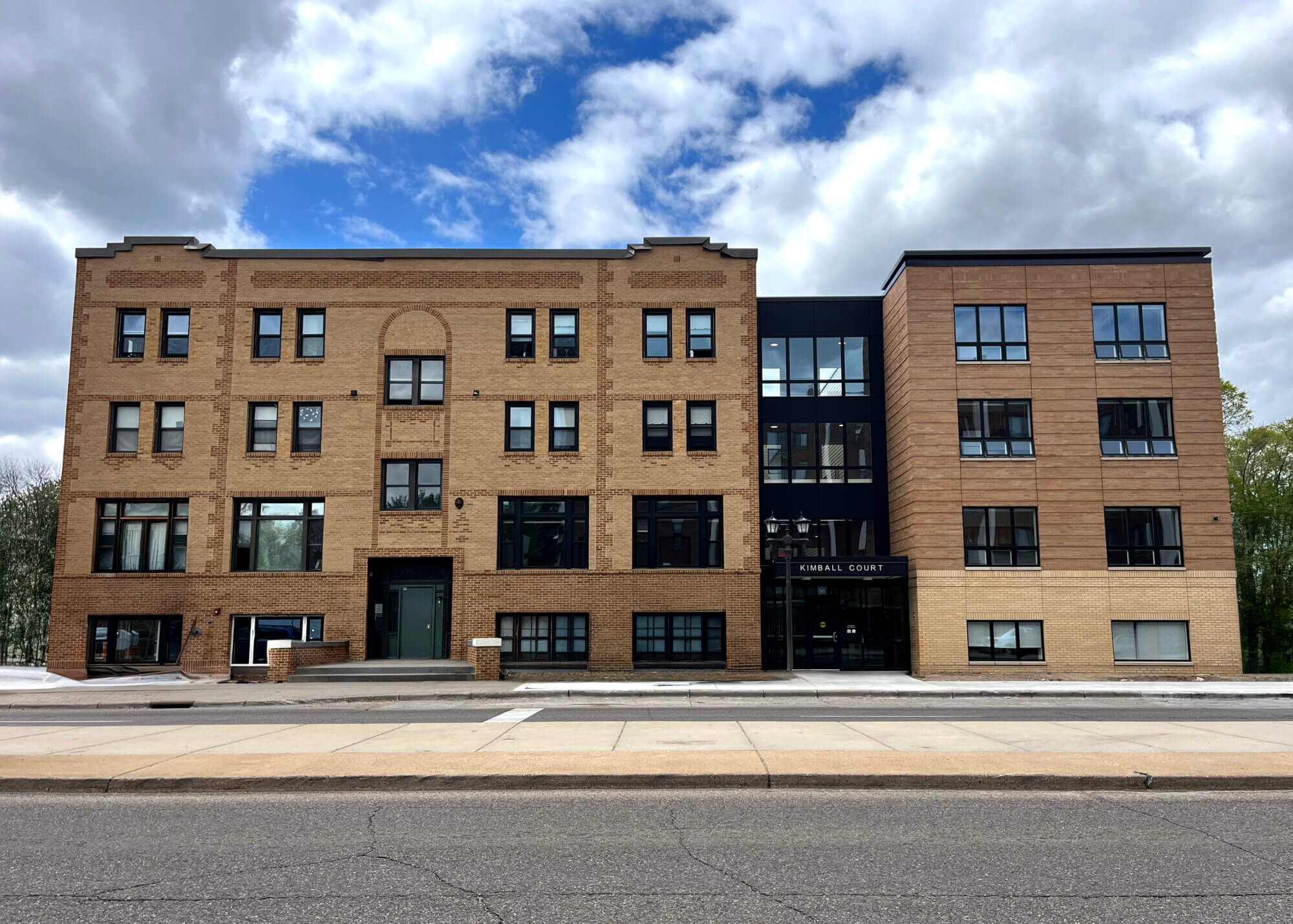
On August 5, the City of St. Paul announced that it would close an encampment at Pig’s Eye Park in St. Paul due to health and safety concerns. At that time, between 150-200 people who had been living there faced displacement, and many moved to another St. Paul encampment. With the support of street outreach teams, some others moved toward shelters or other housing options, including one of Beacon’s newly renovated and expanded properties, Kimball Court.
The abrupt closure of an encampment presents a high volume of displaced individuals and highlights the need for flexible and available supportive housing. Kynda Stull, Beacon’s director of supportive housing partnerships shares, “Beacon’s development plan is to respond to real homelessness and housing stability needs in the community all the time. So, whether or not there’s an encampment, we are expecting the need for this kind of deeply affordable and supportive housing. It’s just that an encampment makes it more visible, more consolidated in the community.”
Street Outreach from Avivo and the Path to Kimball Court
Avivo is Beacon’s contracted service partner at Kimball Court and two other supportive housing sites for single adults. Their street outreach team connected with people at the Pig’s Eye encampment to offer options that might fit their needs, including available units at the newly expanded and renovated Kimball Court.
Kimball Court’s “lease-up” process, or the process of filling the available units in a new Beacon building, aligned with the closure of this encampment, but it’s not just as simple as walking a new resident home. Kynda shares, “It’s a little more complicated than that. Not everyone is eligible for these programs, not everyone would choose them, and these programs don’t fit for everyone.” There is a reason why a new building doesn’t necessarily “solve” an encampment problem; rather, Kynda says, “a place like Kimball Court is an important component of an overarching approach to supporting people living without permanent housing.” There is no one disabling condition or situation that leads someone to live in an encampment. There is no one solution, either.
Kynda adds, “We’re always trying to build housing that will meet the needs of people in our communities, and we use data to inform where and how many people are struggling to find safe and affordable housing.”
Choosing Supportive Housing as a Solution
As Kynda says, “Supportive housing can serve various communities with various needs in various regions. So, its flexibility and innovation make it work not just for one demographic or one condition. It’s a very powerful solution in that regard and is an investment in people in our community.”
Beacon does not deliver on this investment alone—it is made, of course, in deep partnership. Kynda acknowledges the profound impact of committed partnerships; “I have to champion the power of partnership. We want to collaborate with partners to bring the very best of each of our strengths together and that includes, for example, Avivo’s work in encampments. [Partnership] is what makes these not just buildings where people come and live, but also buildings where resources are attracted and consolidated, where people are really elevated and empowered to thrive.”
The following partners at Kimball Court showcase the scope of services within supportive housing:
- Relative Intel Security provides security at Kimball Court and is a partner to Beacon across nine total supportive housing properties.
- Property management at Kimball Court is delivered by Property Solutions and Services, who manages 10 Beacon supportive and affordable housing properties.
- Avivo provides supportive services at Kimball Court and two other Beacon supportive housing programs.
In addition, supportive housing like Kimball Court requires braiding a variety of public and private resources to bring about a quality experience, including:
- Ramsey County Coordinated Entry is the referral valve for eligible applicants
- Ramsey County Continuum of Care awarded Kimball Court a meaningful service award that supported the building’s improvements
- Ramsey County Office of Housing Stability helps administer housing supports to roughly 75% of the Kimball Court building
There is plenty of work to be done as we continue to seek solutions in the continuum of homelessness response. However, when partnerships thrive and we work together to match people with supportive housing that meets their needs, we activate a success that can be multiplied with policy changes, funding, and public support. Getting folks into supportive housing is a success, and partnership makes it possible.
Encampment Closures Emphasize Where to Focus
With the Pig’s Eye encampment closure, people saw an abrupt response to a condensed picture of the issue of unsheltered homelessness. That there were available units at Kimball Court was a moment of good fortune to the six individuals who now live there, and Kynda emphasizes that even within the solution of supportive housing, there is immense variety and a great need for flexibility—indeed, it’s a strength of this highly researched, evidence-based solution. While Kimball Court offers an opportunity for single adults in the local community, we need diverse supportive housing opportunities such as multi-family housing with large unit sizes or housing that offers specialized services.
To close an encampment is one-dimensional and ultimately expensive. People continue to experience unsheltered homelessness and rely on costly public systems. Alternatively, flexible site-based supportive housing is a cost-effective response. In a recent interview with Matt Trainor of Minnesota Coalition for the Homeless, Trainor reinforced that a constitutional amendment to use 3/8% sales tax hike to fund short term responsiveness and permanent housing solutions is “the best solution we have at the moment.”
Kynda Stull has been at Beacon for over six years and has worked in supportive housing for over 20 years. She and a team of three staff members manage and maintain the many partnerships that, when woven together, provide comprehensive supportive housing to residents across 16 Beacon properties. Importantly, Kynda’s leadership is innovative and rooted in trauma-informed practices that activate partnerships to support Beacon’s mission: that everybody has a home.