Nicollet Square Receives $750,000 Transitional Living Program Grant
Written by Davis Parker, Public Grant/Program Evaluation Coordinator
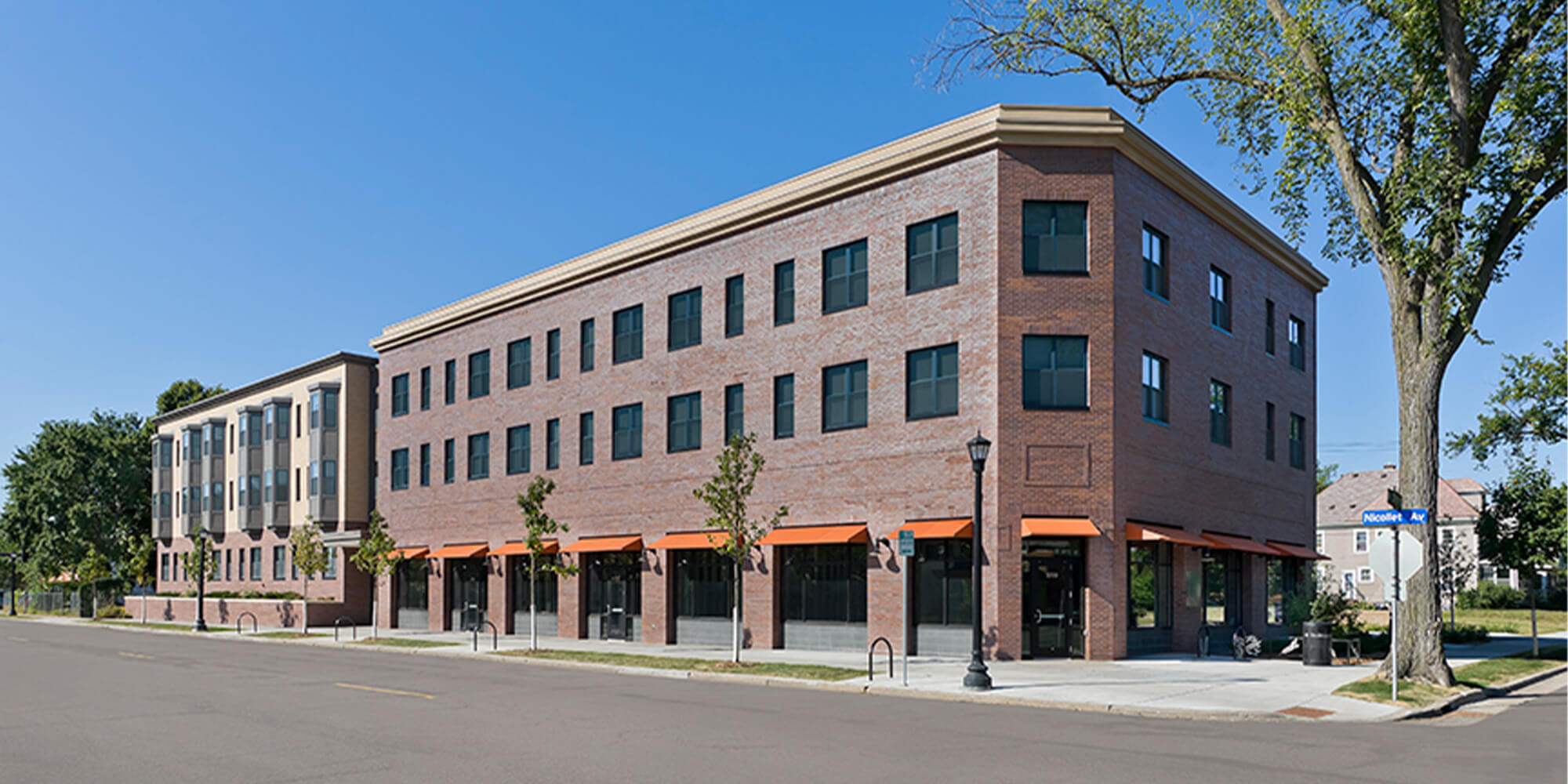
Beacon was honored to be awarded a 3-year, $750,000 Transitional Living Program grant within Nicollet Square, Beacon’s first apartment developed for youth and young adults exiting homelessness.
This federal award, through the U.S Department of Health & Human Services’s Family & Youth Services Bureau, was among only 78 awards across the nation made under this year’s competition. This award will help to sustain services and provide safe homes for youth living at Nicollet Square.
While we celebrate this success, I personally also give pause to ask: why is a program to support youth experiencing homelessness so competitive? Why do we not believe all youth who face homelessness deserve such support? What expectations do we have for youth to “lift themselves” out of homelessness?
 The selection of Nicollet Square was in part recognition of the successes of youth previously served in this unique model, where youth lease their own apartments, pay a ‘flat rent’ regardless of income, and have intensive employment- and education-focused supports available on-site as part of a holistic wellness/healing service model. Yet youth see their successes, rightly, as a result of their gifts, hard work and resilience.
“Wherever 10 years is from now, I am going to look back at myself and say you did it,” as Clifton, a current resident, said.
Youth at Nicollet Square have reason to be proud:
- 93% of the youth who have exited under our previous Transitional Living Program grant did so to a safe and stable destination.
- 70% of these youth exiting into stable housing secured this housing with no further public subsidy, most often renting their own market-rate housing.
- Even as the community begins to recover from the pandemic, 83% of youth are working and 60% have kept their jobs for at least 60 days.
- Under an income analysis done before COVID, over the course of youth’s participation at Nicollet Square, the median annual income of youth increased from $4,200/year at entry to $11,125/year at exit. This exit income level exceeds the median earnings of general population/non-homeless youth at this same age.
- 73% of youth who entered the TLP with public assistance as their primary income source transitioned to earning a higher income through work.
Nicollet Square’s goals are aligned to help youth recover from being disconnected from supports afforded to most young people during the transition into adulthood, and “climb the ladder” out of poverty and into a more stable future.
Research supports that if transition-aged youth can graduate from high school with >2.5 GPA, not be convicted of a crime, live independently, and achieve income >250% of the poverty level—they largely can achieve the middle class.
Past results support the Nicollet Square youth’s effectiveness in doing so. 19% of participants had been successful in achieving incomes >250% poverty level even before exiting Nicollet Square (an income level that is about $32,000/year) and the structure of the Nicollet Square apartments allows youth to live independently.
But why do we expect youth to need to demonstrate lifting themselves up to compete for a federal grant like this? Holding youth to high expectations supports their development and growth, but primarily there are simply not enough resources available through this federal program compared to the scope of youth homelessness in the U.S., where one in 10 youth ages 18-25 are estimated to experience homelessness at some point during this transition into adulthood.
Many deserving youth programs across the country were not funded under this current Transitional Living Program competition, and the youth they serve will miss out on this source of support. Last year, only 35% of renewing Transitional Living Programs were successful in their renewals. The National Network for Youth is a leading voice for increasing the funding allocated to federal programs addressing youth homelessness, including Transitional Living Programs.
And what expectations are reasonable for supporting youth during this transition? The federal Transitional Living Program can support youth for up to 18 months. Is this enough time for youth who have been homeless, and often experienced previous lived and historical traumas, to heal, develop protective factors, and build stability? Does our society expect youth to be self-sufficient after this brief period of assistance?
 At Nicollet Square, there are no time limits and youth can stay longer than 18 months but this requires tapping other sources of funding and the generosity of Beacon donors.
(Pictured, front desk at Nicollet Square with mural.)
At Beacon, we affirm that “all people have a right to a quality affordable home.” This award of federal funds will help Beacon to provide these homes, but also puts the limitations of the current scope of these supports in contrast to the level of need in our community and others across the nation. I mean not of the need in terms of the hundreds of youth who experience homelessness every year in Minnesota, but the need to reframe our shared commitments to provide safe homes for all, including young people during the transition into adulthood.
Through the Beacon collaborative, we are working together to weave this commitment so that all people have a home.