Lesson Two: Supportive housing ends homelessness
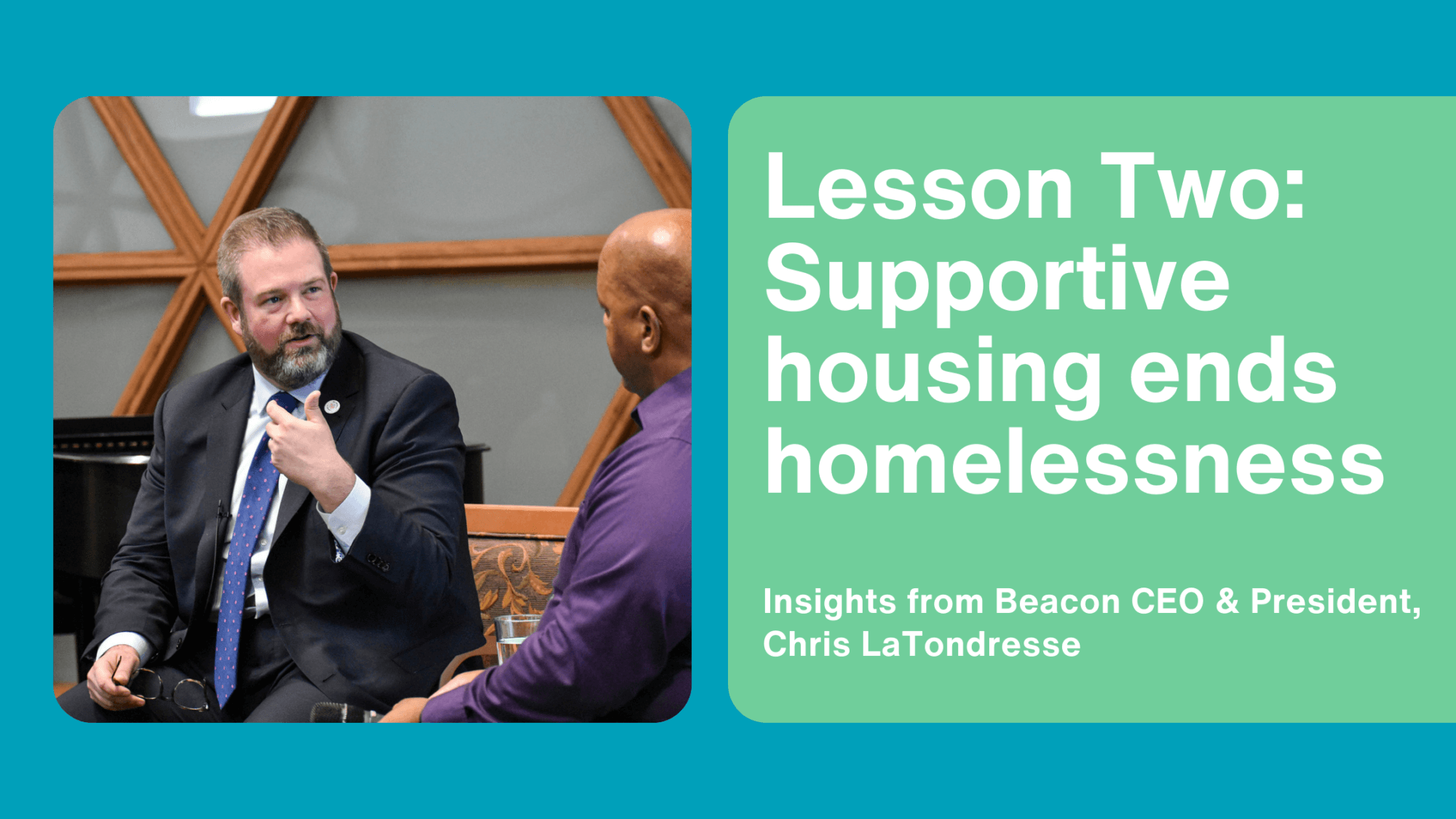
Ten months into his role as President and CEO of Beacon, Chris LaTondresse reflects on what he’s learned at the head of a leading supportive housing nonprofit and what it will take to sustain this work. This is part two of Chris’s reflections. Click here to read part one.
Ending homelessness requires a thriving, supportive housing sector.
Most new affordable housing (especially homes for those exiting homelessness) is the result of public-private partnerships between public funders, mission-driven affordable housing developers (like Beacon), and generous community support.
This is doubly true for supportive housing: permanent, deeply affordable homes with on-site services tailored to residents’ unique needs. Beacon creates, sustains, and advocates for this kind of housing.
As one of Minnesota’s leading supportive housing organizations, Beacon serves over 1,100 residents living in 750 homes across 20 properties. Over 90% of these homes are affordable at or below 30% of the area median income (AMI).
Two-thirds of these homes include onsite services delivered through partnerships with seven non-profit service providers. Over 90% of residents living in Beacon homes identify as Black, Indigenous, and People of Color (BIPOC).
At Beacon, we believe (and research proves) that supportive housing offers a transformational solution for breaking the cycle of homelessness and setting up residents for long-term success.

According to the Corporation for Supportive Housing, supportive housing changes lives, results in significant cost savings to public systems, and strengthens communities. We see evidence of this every day with the individuals, youth, and families we serve.
This is incredibly rewarding, mission-rich work. But it’s also hard work.
Supportive housing is rare, difficult to produce, and (as I’m learning) often more challenging to sustain long-term. Very little of this housing exists despite the extraordinary need. If we want to make any real progress on ending homelessness, we need to protect the supportive homes that currently exist and increase the number of units to better meet community needs.
It’s becoming clearer by the day that, at this moment, Beacon and our peers must focus on creating new supportive housing and commit to providing quality operations and management to better serve residents living in homes made possible by yesterday’s investments.
As I’ll share in a future post, sustaining current supportive housing will require significant investment in the capital needed to create new homes and ongoing funding for operations and services to ensure we can continue serving residents (and our communities) with the excellence, fidelity, and care everyone deserves.
Thank you for accompanying us on our mission to provide quality, supportive housing. Your generosity and advocacy make what we do possible.
This is part two of Chris’s reflections. Click here to read part one.