
How mental health services at Nicollet Square help residents grow
Written by Dylan Novacek, Content Specialist.
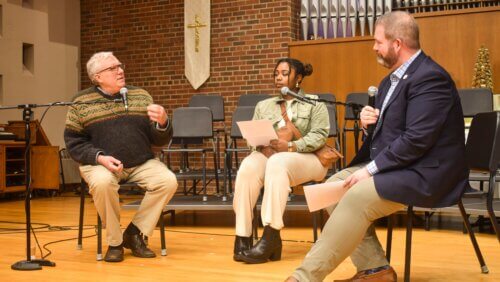
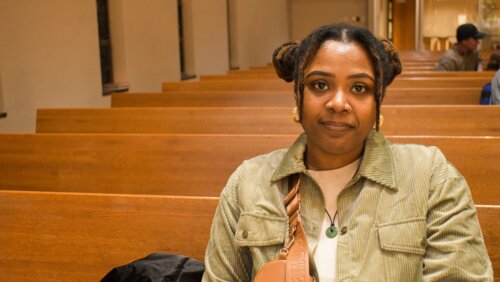
“Every moment working with the residents at Nicollet Square felt powerful. The youth who joined our drop-in sessions brought their whole selves and were truly present,” reflected Alicia Farrington, Clinical Intern at Kente Circle. “We’d all share a meal together and open up to one another. All the youth were so brave as they shared their successes, difficulties, challenges, and how they handled them. There was a bond that deepened in this space.”
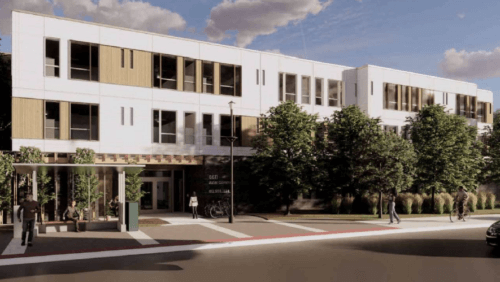
 At Nicollet Square, youth supportive housing from Beacon serving 42 residents emerging from homelessness or extended foster care, residents receive holistic wraparound services which help them maintain their stability. Our onsite service providers from YouthLink connect residents to programs and services in the community. Recently, they’ve partnered with the Cultural Wellness Center (CWC) and Kente Circle to facilitate drop-in group mental health services as an opportunity for residents to grow as individuals and as a community.
“I believe each person has the power within themselves to make positive change,” Alicia continued. “In our relationships with the residents at Nicollet Square, we helped them understand their own unique identity and strength. Seeing residents grow on this journey has been beautiful to see.”
“Having a space for residents to come share who they are and help them get to where they want to go next is so important,” added Julie Greunke, Clinical Intern at Kente Circle.
How Kente Circle and the Cultural Wellness Center approach serving residents
Founded in 2004, Kente Circle’s mission is to help communities grow through the recognition and affirmation of communal faith, genius, and health. Their vision is to validate each community member’s genius to assist with transformation by building relationships through therapy, training, and partnership.
 “We believe there’s a need for culturally specific spaces, and a need for organizations who intend to serve populations of color,” expressed Larry Tucker, co-founder and CEO of Kente Circle. “As an organization, we try to be innovative in our approach to mental health. We were able to do that with our work at Nicollet Square.”
“We intentionally framed sessions as a leadership skills group because there is stigma about attending group therapy,” Julie shared. “Together we unpacked the skills it takes to be a leader, like self-control and emotional awareness. From there we’d open up to each other and have important conversations.”
“We facilitated group conversations around topics like trust, identity, resolving conflict, becoming your own self advocate, and communicating your needs,” Alicia said. “One of our most powerful sessions was on truth telling. I felt that is when the residents really came to life and connected with the sessions.”
Co-facilitating the group with CWC, the team at Kente Circle found the entire experience to be transformational for both residents and the staff working with them.
“Working in partnership with the CWC was a rich experience,” shared Coco Anouk Orvis, Clinical Intern at Kente Circle. “Sister Lateshia, our CWC co-facilitator of the group, brought in elements of their Truth Telling and Community Healing curriculum, alongside the Kente Circle curriculum. This work engaged and strengthened our cultural connections to self and community as we found our own geniuses and reflected that truth back onto each other, witnessing and affirming, as a healing intervention.”
How Kente Circle and the Cultural Wellness Center curates a safe space for residents
 Curating a safe space, the staff at Kente Circle and the Cultural Wellness Center welcomed residents with a shared meal and activities such as painting. Beginning their sessions in the lounge, they’d move into a more private space to begin personal conversations. It’s not always easy to have conversations that inspire healing as a community. Through their resident centered approach, the staff walked with the youth on their journey to unpack important topics and develop tools that can help them thrive in their personal lives.
“We were guided by the resident voices,” Julie continued. “It took us a few sessions to really get going. We had to build a lot of trust with the residents. Youth like those at Nicollet Square have often been discounted or written off in their lives. So, we empowered them and walked with them at their pace, with no judgement. We moved with them.”
“We set out to partner with the residents to strategize with them around how we can build health and success within their lives,” Larry added. “We were very intentional about approaching this work from a cultural perspective as we looked at each resident as a whole.”
Walking with the residents on their mental journey not only highlighted why these services are essential, but also why communities like Nicollet Square are so impactful for young people who are exiting instability.
“We were able to clearly see that there was a unique culture in the building,” Larry noted.
“There was a resident who knocked on doors every week, and was always sure to remind people to attend,” Alicia recalled.
“One unique thing about Nicollet Square is how much people were willing to reach out and support each other in the building,” Julie smiled. “There is a shared sense of care and community in the building. And together we deepened those relationships beyond a simple hello in the hallway. Residents grew as individuals and as a community.”
What’s the impact of youth supportive housing?
At Nicollet Square, residents receive a wide variety of specialized services through the onsite case management staff at YouthLink. When YouthLink brings in additional resources and partners such as Kente Circle and CWC, it widens the scope of what residents have access to.
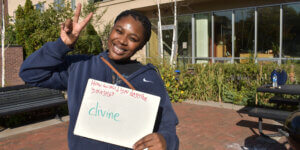 Affordable youth supportive housing plays a unique role in breaking the cycle of homelessness. According to the 2018 Minnesota Homeless Study from the Wilder Foundation, an estimated 13,300 Minnesota youth on their own experience homelessness over the course of a year. Youth on their own make up about 15% of the total homeless population in Minnesota.
When youth receive access to homes with affordable rent and onsite services, they can stand on stable ground, set out their own path, and begin building the lives they have always hoped for. In fact, in 2021 it was found that 93% of youth who exited Nicollet Square did so to a safe and stable destination. 70% of those youth exiting into stable housing outside of Nicollet Square did so with no further public subsidy, most often renting their own market-rate housing.
Not only are homes like Nicollet Square essential in the efforts to see that all people have a home, but the services offered play a vital role in ensuring these young people remain stably housed so they can build a better life for themselves.

“These services are important because it has allowed for an intentional space to help these residents grow individually and collectively,” Larry added.
“Spending time with the residents and watching our sessions grow each week was validating. It became clear that these services are essential to the residents,” Julie concluded. “Healing and growth takes time, and it’s so worth it because it’s so wanted by the residents.”
Will you help provide residents with the supports they need to thrive? It takes $1,000 a month per resident from Beacon donors to provide them with personalized case management through our service providers across our 12 supportive housing developments. Click here to make a gift today.
Click here to learn more about Kente Circle and the Cultural Wellness Center.