Lessons from a CEO, Part Three: Increasing community need equals greater challenges for supportive housing organizations
Nearly a year into his role as President and CEO of Beacon, Chris LaTondresse reflects on what he’s learned at the head of a leading supportive housing nonprofit and what it will take to sustain this work. This is part three of Chris’s reflections. Click here to read part one. Click here to read part two.
For supportive housing organizations like Beacon that are responding to increased resident vulnerability and acuity of need, we stand in a very real gap between what our mission calls us to do and what is currently funded through public sources.
The mental health crisis, opioid epidemic, and aftershocks of the pandemic economy have hit the communities we serve and Beacon residents hard. In turn, this means new operational and financial challenges for us.
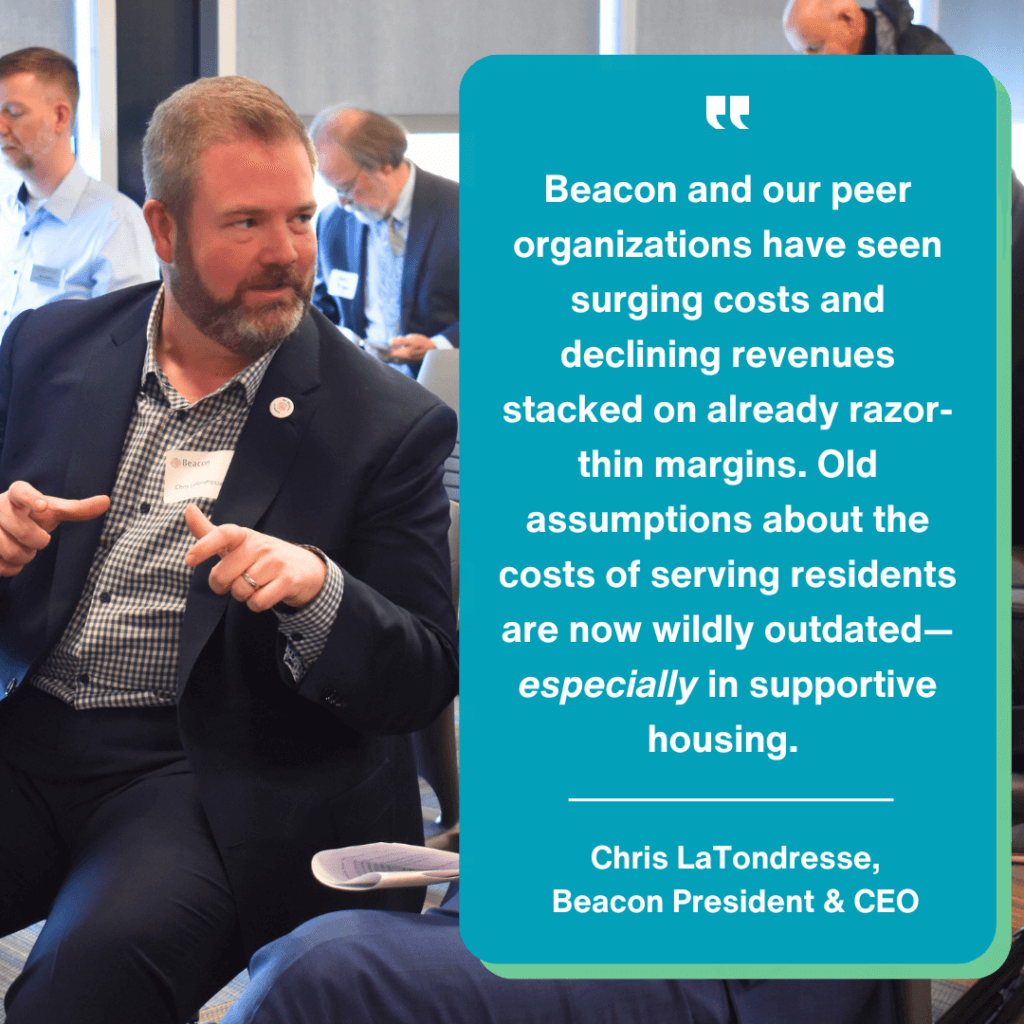
The fundamentals of providing high-quality homes and services in a setting that’s safe for both residents and staff have changed over the last few years. Beacon and our peer organizations have seen surging costs and declining revenues stacked on already razor-thin margins. Old assumptions about the costs of serving residents are now wildly outdated—especially in supportive housing. And for ‘Housing First’ properties serving individuals exiting chronic homelessness, 24/7 safety and security services are a new cost of doing business. Beacon’s commitment to excellence is confronted by the realities of operating budgets.
READ MORE: Understanding Housing First part 1: Home before anything else
Beacon also owns and operates supportive housing that serves families and young people, such as Cranberry Ridge in Plymouth and 66 West in Edina, respectively. While family and youth-focused homes like these do not usually have the same security needs, the level of investment needed to serve residents continues to grow due to inflation, staffing costs, and more.
That’s the story we’re all living right now. It’s the housing crisis broadly. It also highlights how the social and economic impacts of the pandemic have made our residents more vulnerable in many instances. This increased vulnerability has made Beacon more vulnerable and has made it much harder to stand in the gap and serve residents with excellence, fidelity, and care.
As we wait for policymakers to catch up with these new realities, organizations like Beacon are holding more than we’ve ever been asked to take on before.
Beacon has never shied away from what’s hard. But it will take a collective solution to solve the challenges of this moment. And Beacon will not be able to meet this challenge alone.
Stay tuned for Lesson Four of my four-part series of blog posts on the state of supportive housing and what I’ve learned since becoming Beacon’s CEO and President.
This is part three of Chris’s reflections. Click here to read part one. Click here to read part two.